Your Guide to Decoding Contemporary vs Mid-Century Modern Cabinets to Redefine Spaces
Custom cabinetry can define the character of your living space. In recent years, there has been a growing interest in midcentury modern and contemporary furniture. In fact, many homeowners often find themselves at crossroads. They can’t decide between contemporary vs mid-century modern cabinets. Both design terms have captured the pique of luxury property owners.
With the growing interest in these distinct styles, homeowners can showcase a premium design statement. Whether you are renovating a classic midcentury modern-style kitchen or designing a penthouse with contemporary pieces, understanding these two interior design styles is crucial in creating a look that adds value to your home.
Understanding Cabinet Design Heritage
Cabinets are an integral part of any interior design blueprint. They set the tone for the ambiance of a home. But beyond the aesthetics, cabinet design tantamounts to efficient storage use. How cabinets are viewed and used has changed over the years.
From mere repositories of unused things, cabinets have become art pieces that serve a practical purpose. Cabinets mirror how furniture has been viewed over the decades, from the impact of the American Industrial Revolution to the revolutionary mid-century modern furniture movement.
Understanding such heritage explains why certain design elements continue to spark interest and influence interior designers and homeowners.
The Birth of Mid-Century Modern
The midcentury modern design began during the middle of the 20th century. It developed after World War II, influenced by the European Bauhaus Movement. In a nutshell, the mid-century modern style was a direct response to the era’s technological advances and the introduction of mass production.
Designers became more focused on functionality and simplicity. This is also a break from the excessiveness and formality of the previous design style, the Art Deco of the early 1900s. As mentioned, German Bauhaus principles greatly influenced mid-modern century furniture, with its modular, repetitive, minimalist, and industrial design.
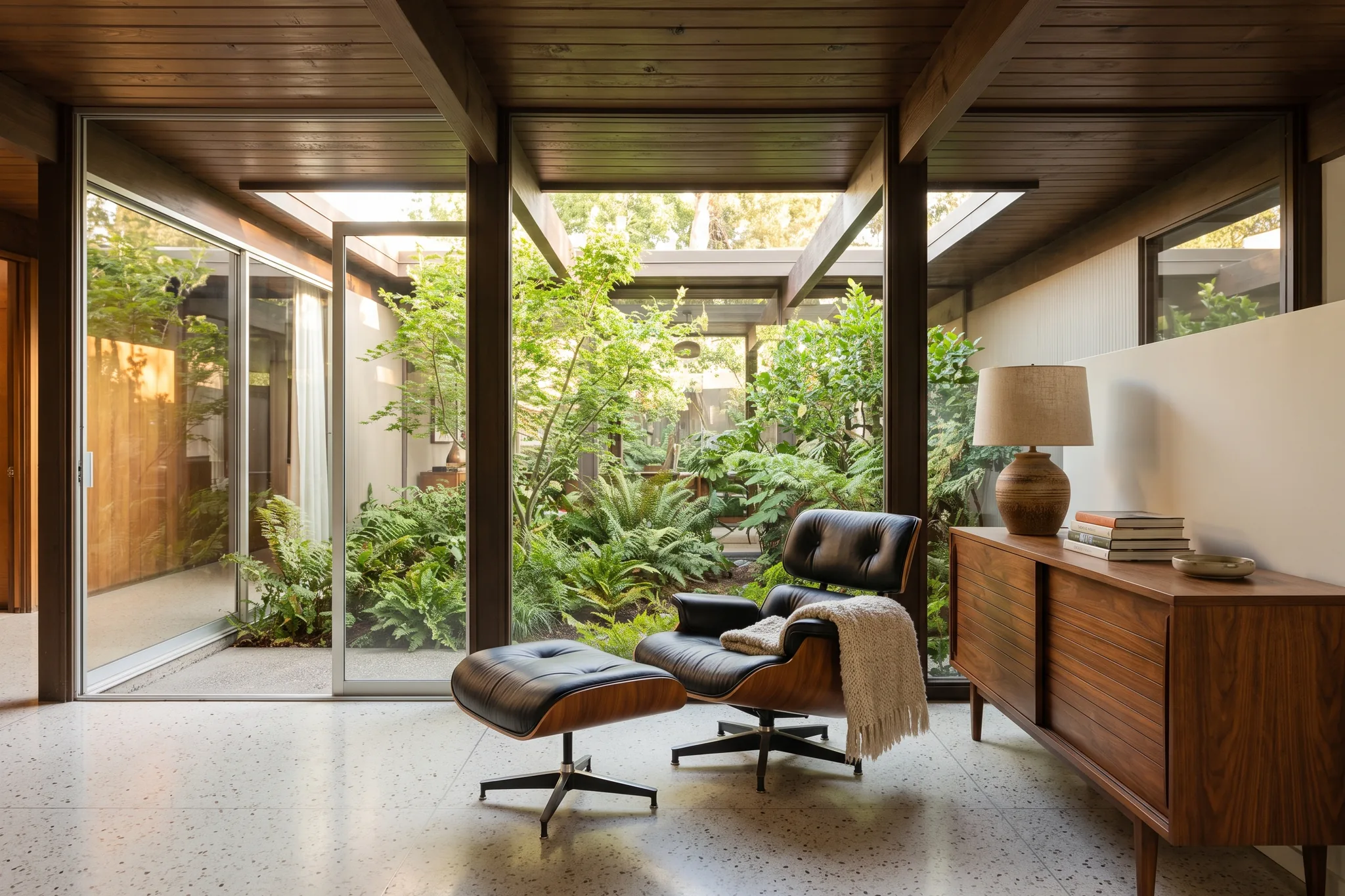
Perhaps there is no other iconic design to define this design movement than the Eames Chair, made by the husband-and-wife tandem, Charles and Ray Eames. Up until now, this chair is still used as inspiration for modern outdoor chairs where functionality takes the front row. In face, some other designs for accent chairs from the mid-century modern era are still being copied today.
Eames, together with Nelson, Paulin, and Wright, popularized the midcentury modern decor through innovative modern pieces that combined natural wood with man-made materials like vinyl, plastic, and fiberglass.
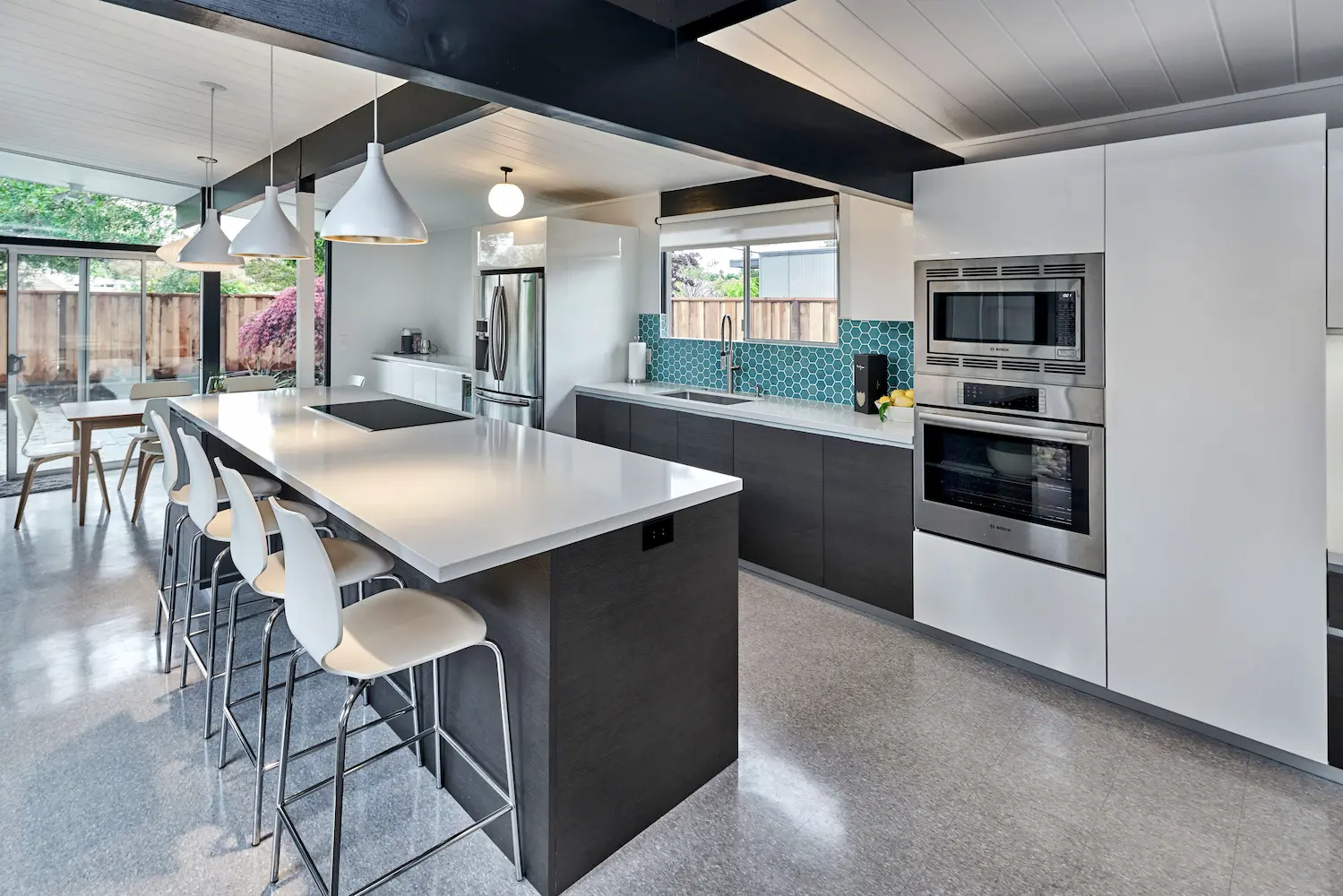
Clean lines, the celebration of natural wood grain, solid colors, rounded edges, and the incorporation of man-made materials are the common elements found in mid-century style furniture pieces. Additionally, California modernism incorporated another level of design into this modern art movement, as seen in the open floor plans of most California homes.
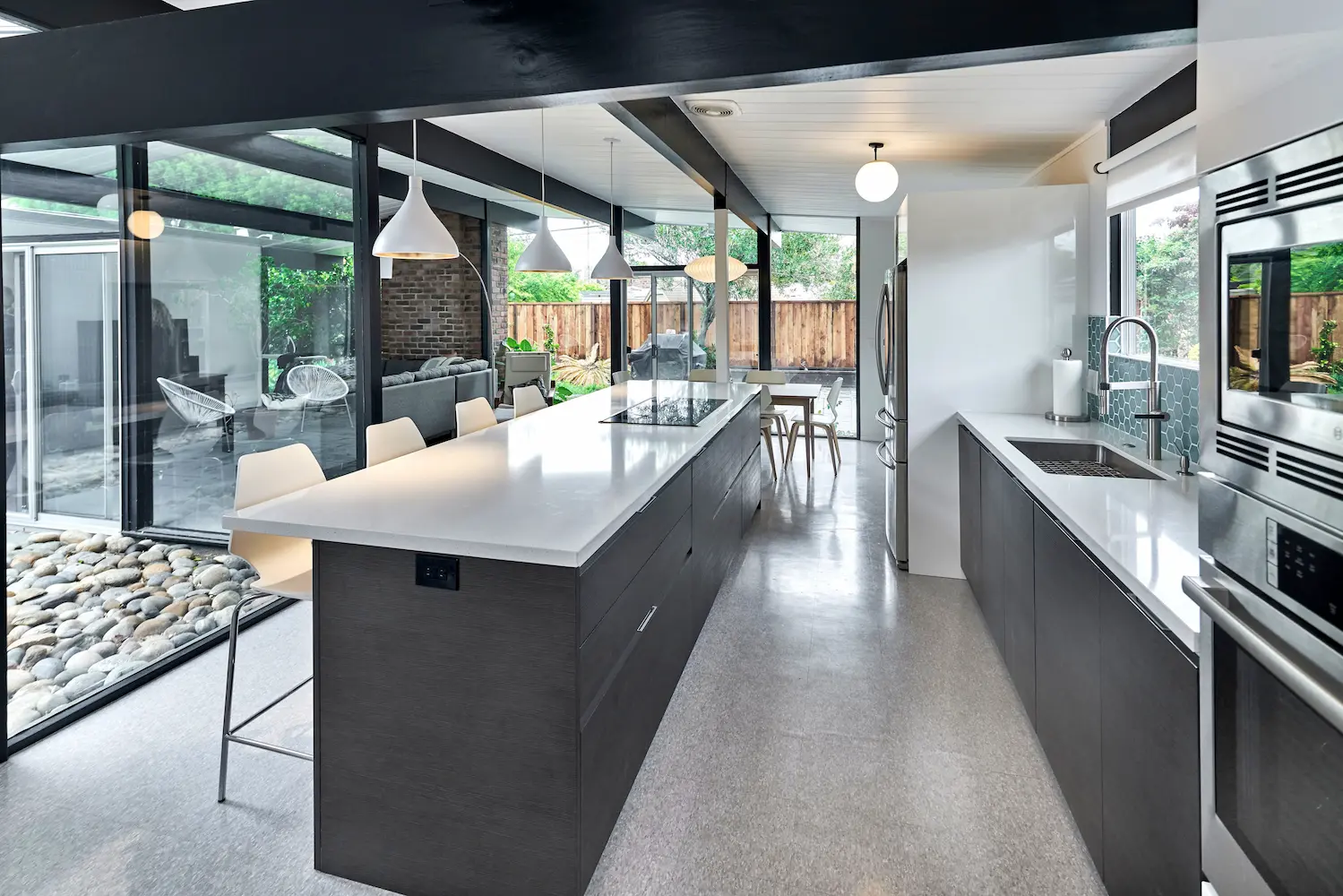
Take a look at many Bay Area homes and one can see the influences of midcentury style, particularly in the use of natural materials, natural light, and nature-inspired color palette.
Contemporary Design Evolution
On the other hand, contemporary design began to pop at the latter end of the 20th century. It is an adaptive kind of design, in the sense that it’s based on trends.
Additionally, the contemporary style isn’t defined by specific timelines, often overlapping with other design movements. Contemporary design often integrates other styles into its design, including minimalism and industrial.
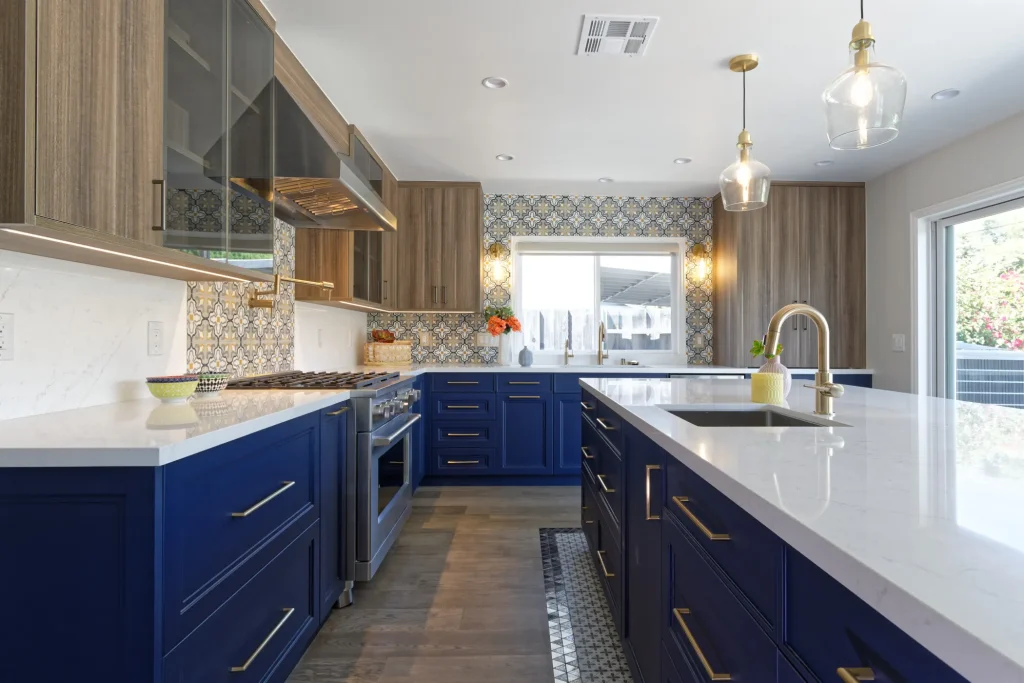
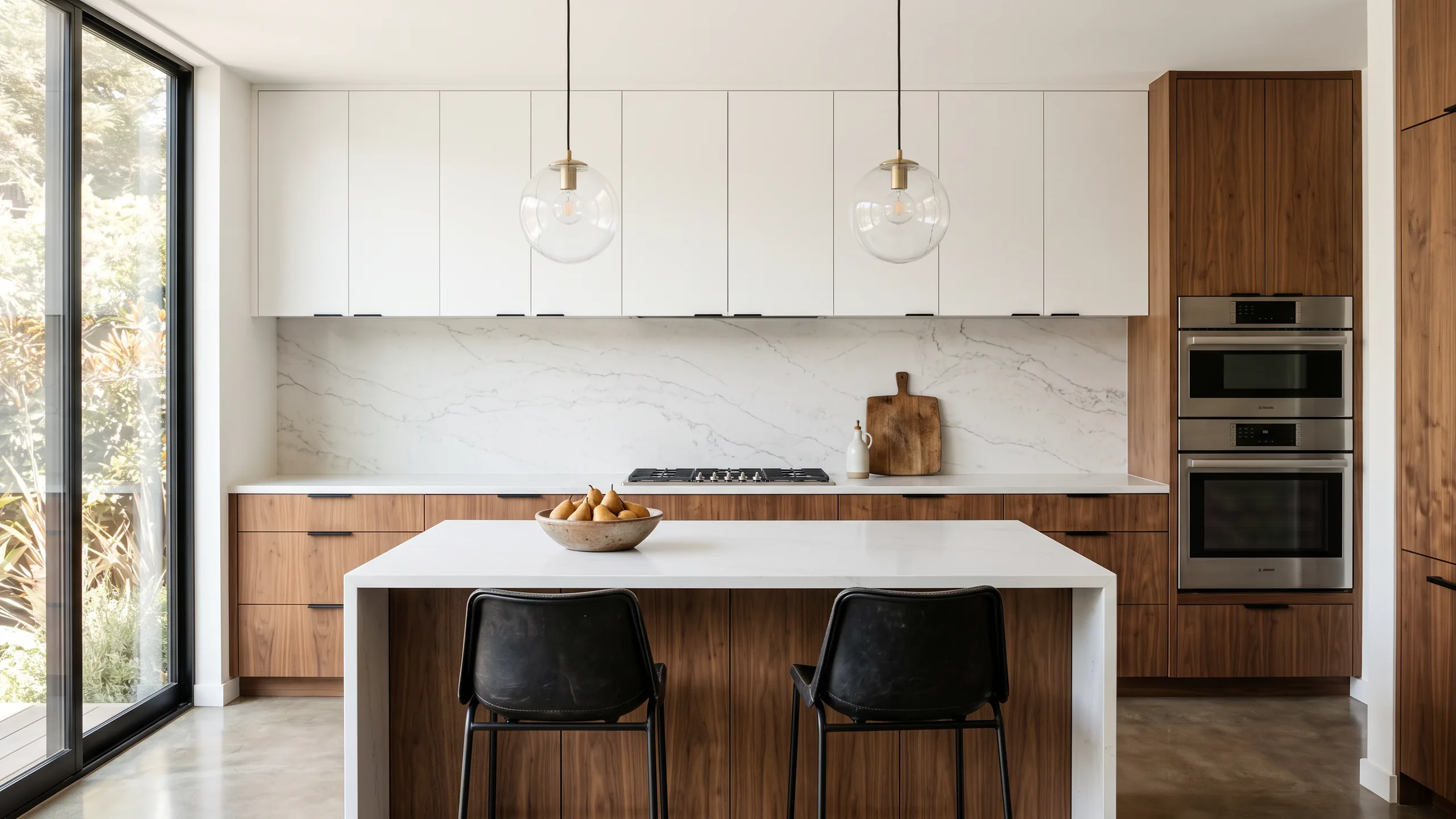
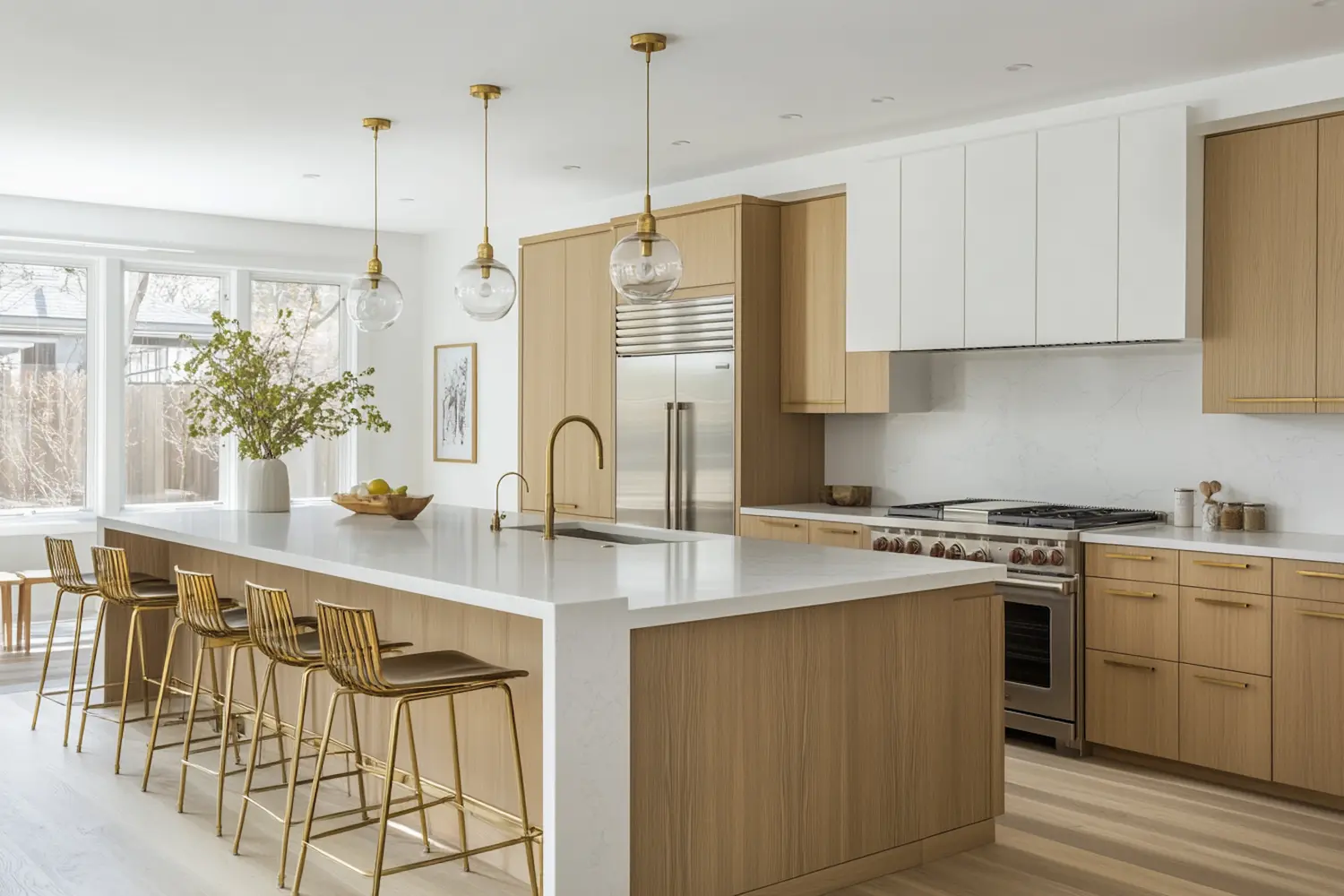
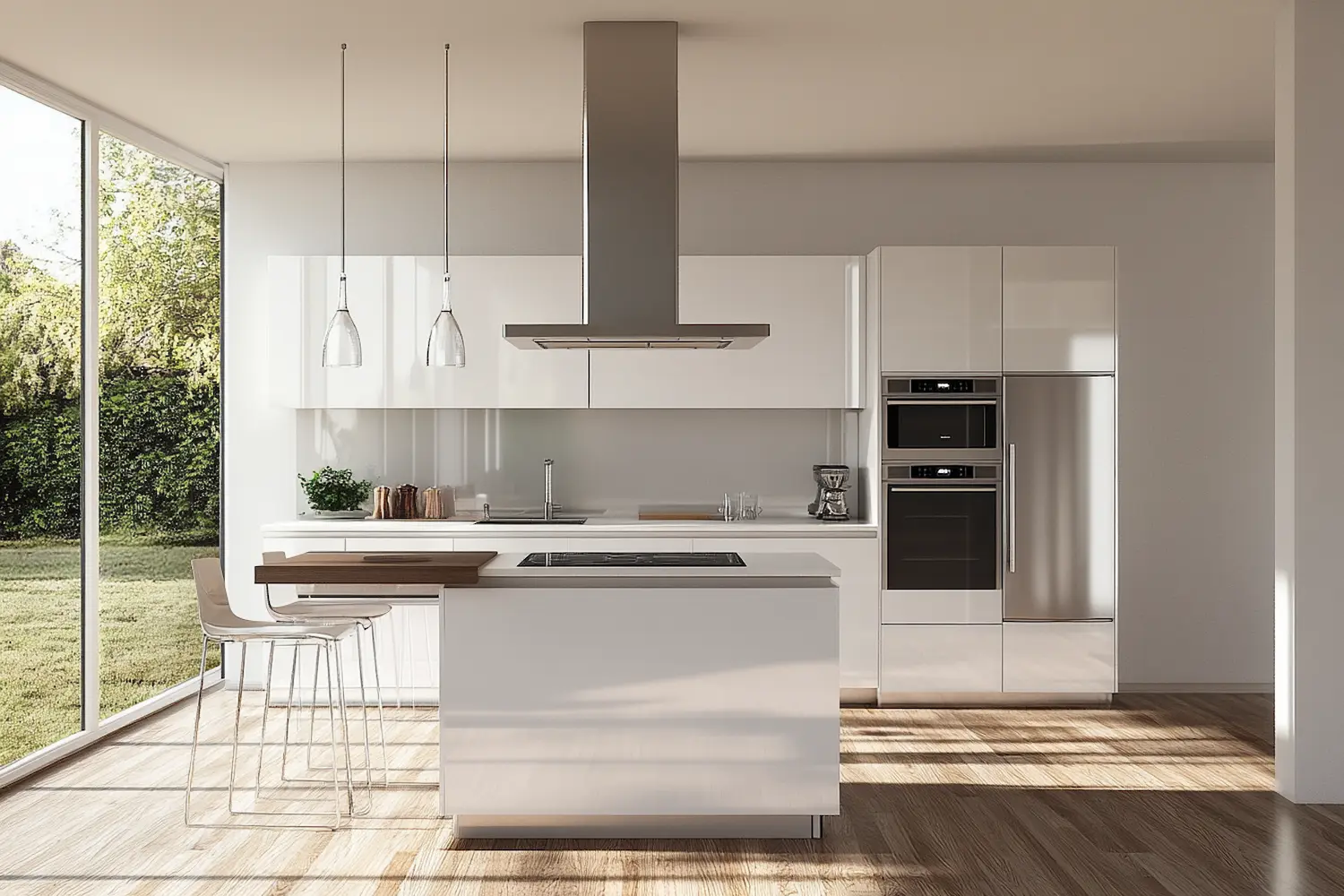
Similarly, contemporary-style cabinets focus on sleek lines, and geometric shapes and imbue openness. You’ll find high-gloss finishes, handleless doors, and streamlined cabinet profiles. The color palettes include bold pops of color but the color schemes also neutral colors.
More often than not, you’d find smart home features and tech-forward design trends in contemporary homes.
Mid-Century Modern vs Contemporary: Comparison of Key Design Elements
How people view living spaces and home design ultimately defines the different styles of interior design. For example, in the 1950s, several design movements challenged the traditional outlook, leading to a groundbreaking approach to functionality and material use.
These different design approaches continue to resonate up until now, providing people with unique outtakes on how their spaces should look. The main difference between cabinets of Contemporary and mid-century modern homes is how storage and design are interpreted, which will be discussed in-depth below.
Contemporary Cabinet Characteristics
Contemporary-style cabinets focus on refined simplicity with a touch of sophistication. They often have high-gloss finishes that reflect natural light and encourage the openness of the space. Cabinets also have smart built-in integration systems to maximize storage space, especially in smaller kitchens.
In the general layout, you’d find eye-catching pendant lighting, often in bold pops for color. These pendant lights become the focal point or statement pieces of the kitchen space.
Mid-Century Modern Cabinet Features
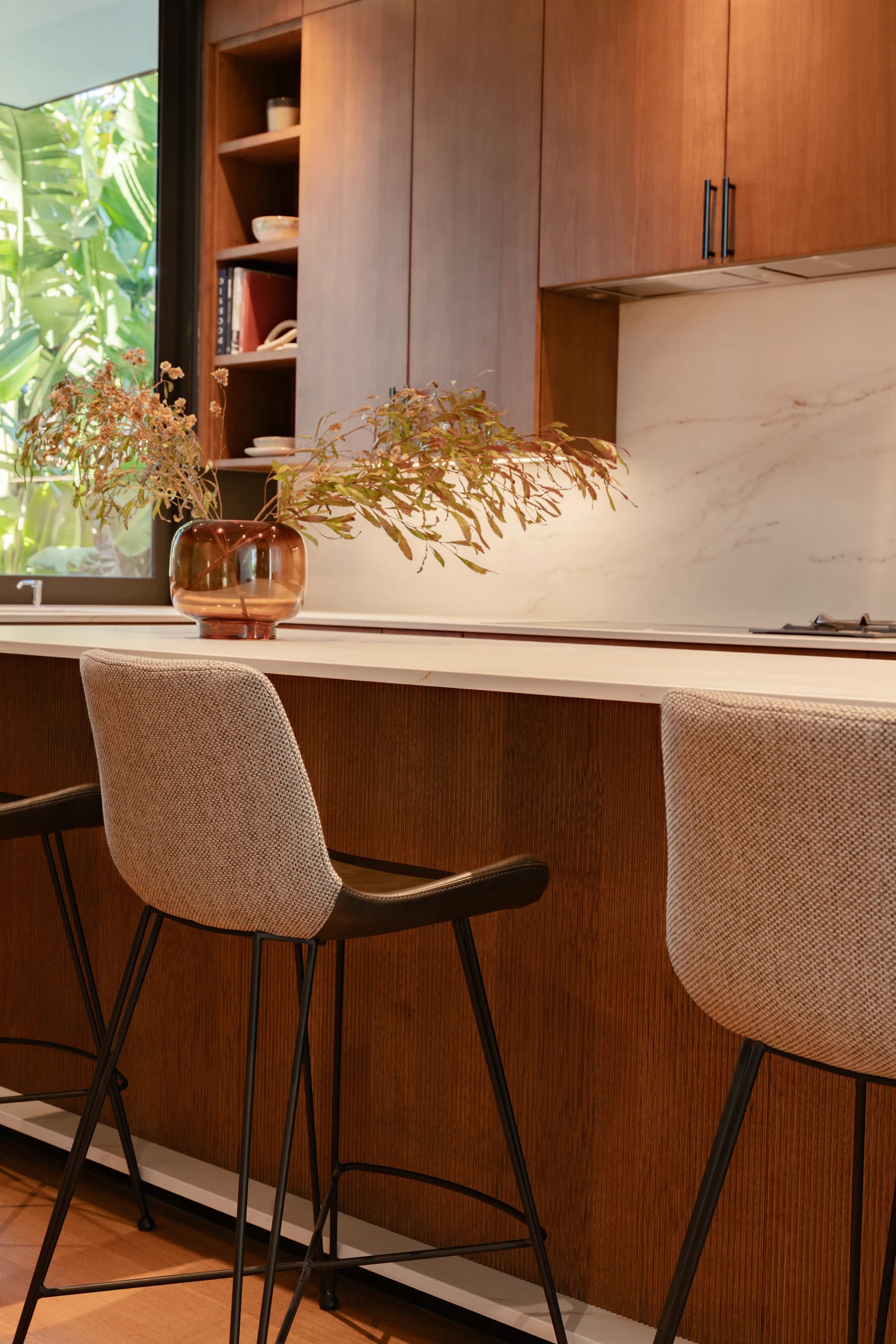
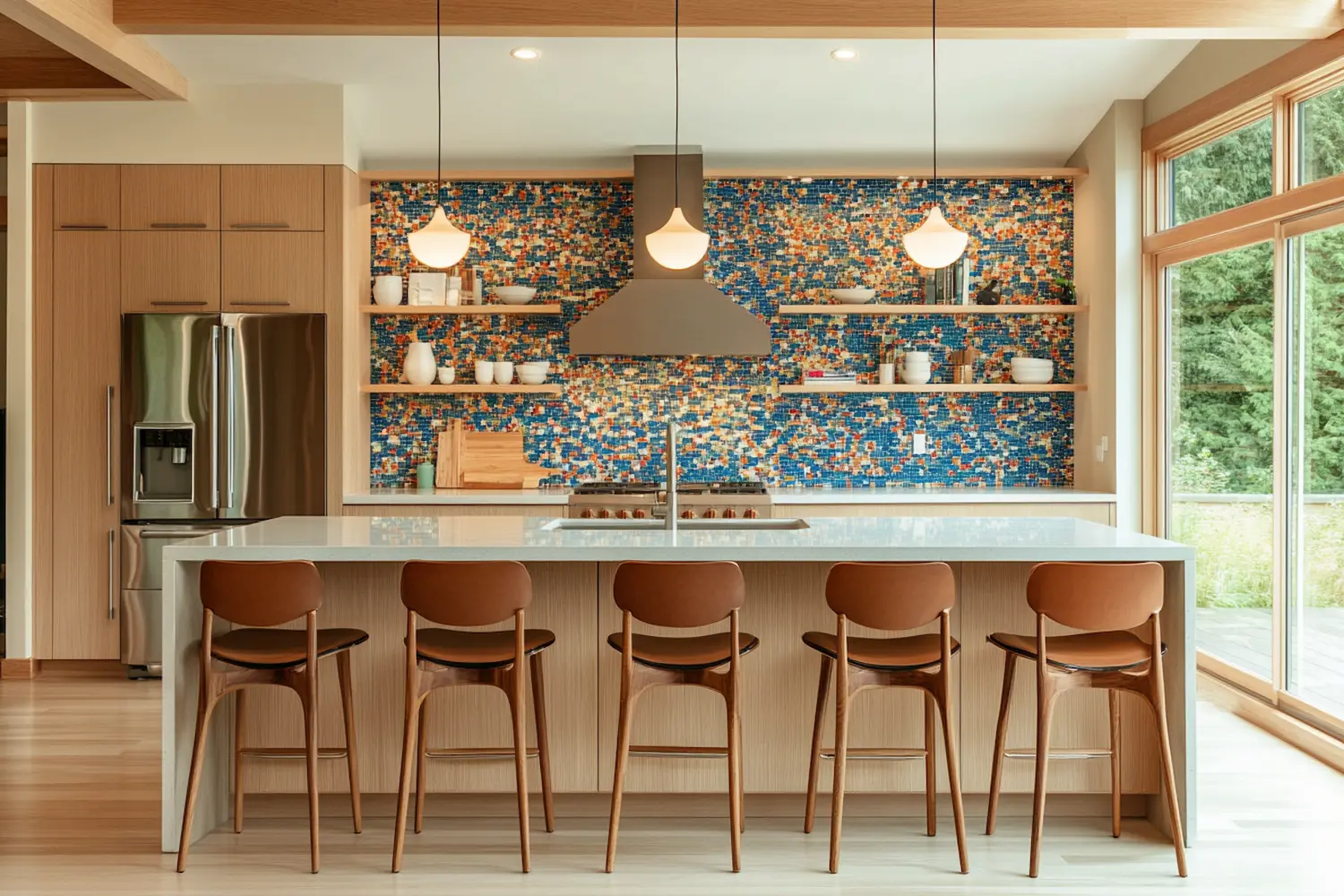
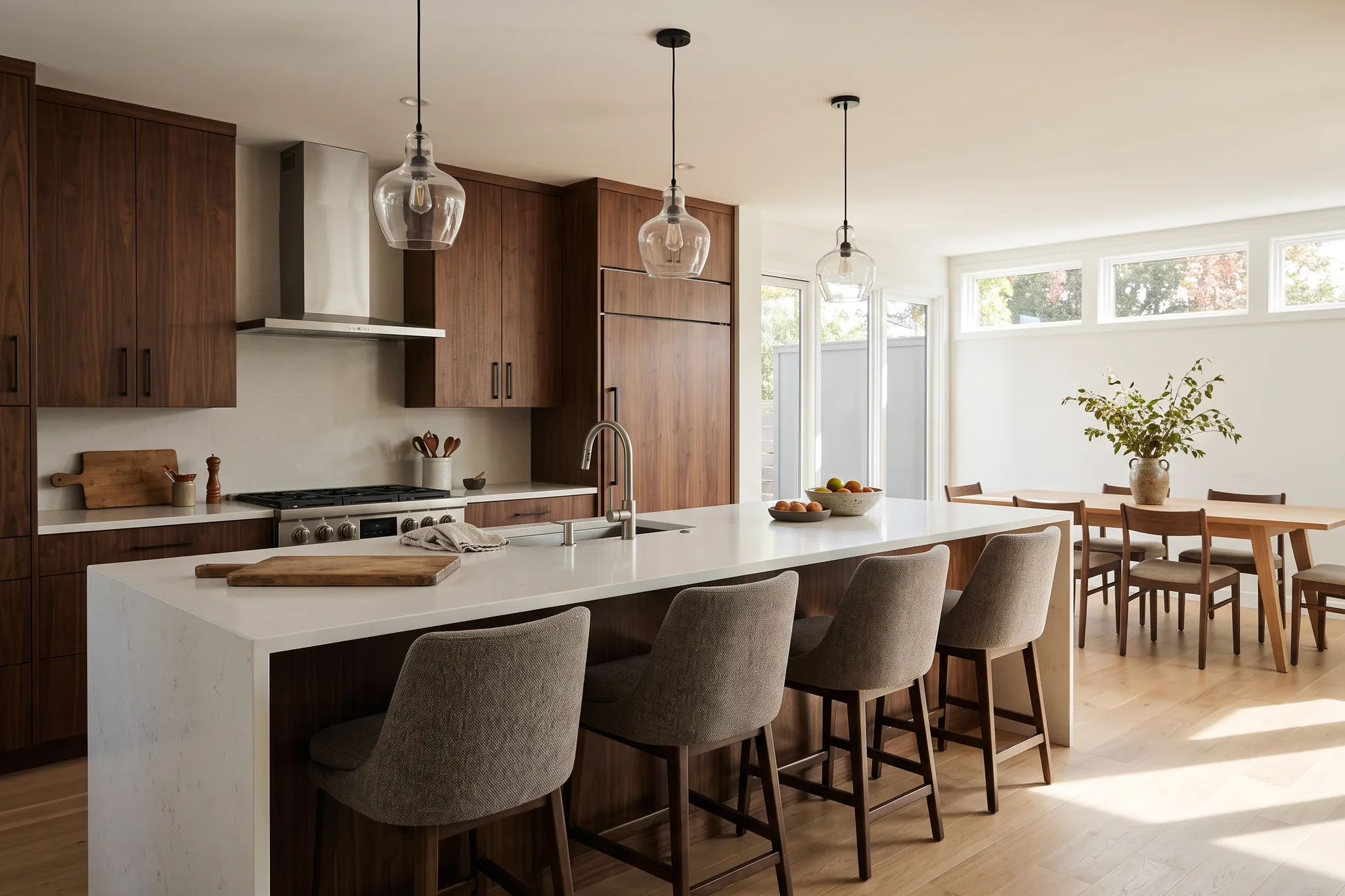
On the other hand, mid-century modern cabinetry draws from the design ideals of the mid-20th century and favors organic, natural elements. Clean lines and organic shapes define this design’s aesthetics. The geometric patterns and simple lines mimic the ones seen in nature.
One of the defining features of the mid-century design is the use of wood. This highlights the natural wood grains, particularly of teak and walnut. It’s used everywhere, for instance, in accent chairs, not just in cabinet doors. Knobs and pulls have a retro feel, often done in the classic style. As with other furniture elements, mid-century cabinets are built for longevity.
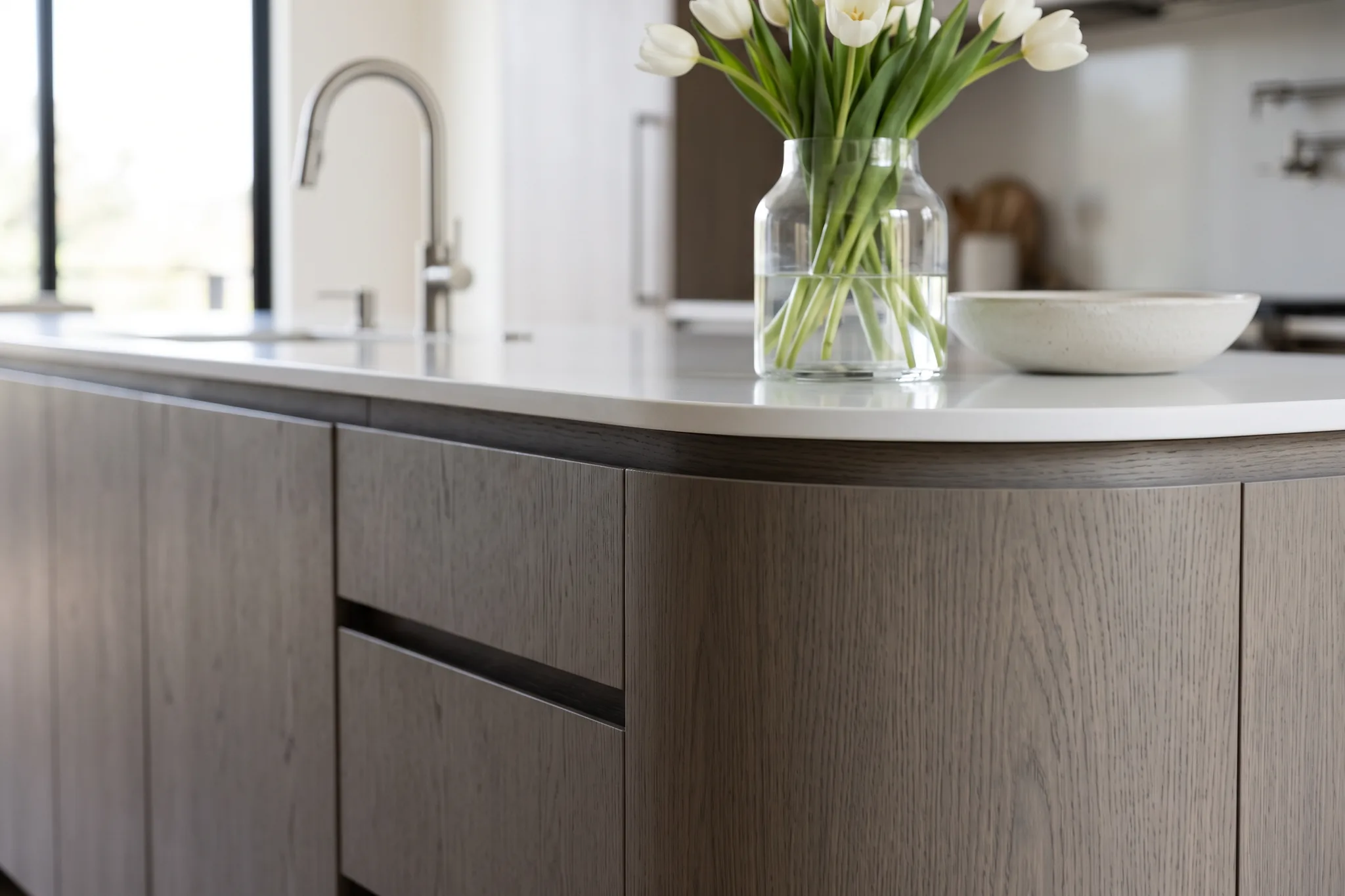
Contemporary Materials
For a modern, luxurious look, contemporary cabinets often use innovative materials that feel timeless. The goal for such is to look sleek and polished. Italian-designed finishes are often found in contemporary-style cabinets, primarily because of their minimalist appeal and subtle elegance.
You can also find glass and metal being combined, particularly when used for cabinet fronts. Glass can either be frosted or transparent. Materials for the cabinets can vary, including high-end laminates. These are durable and provide a wide array of colors and patterns.
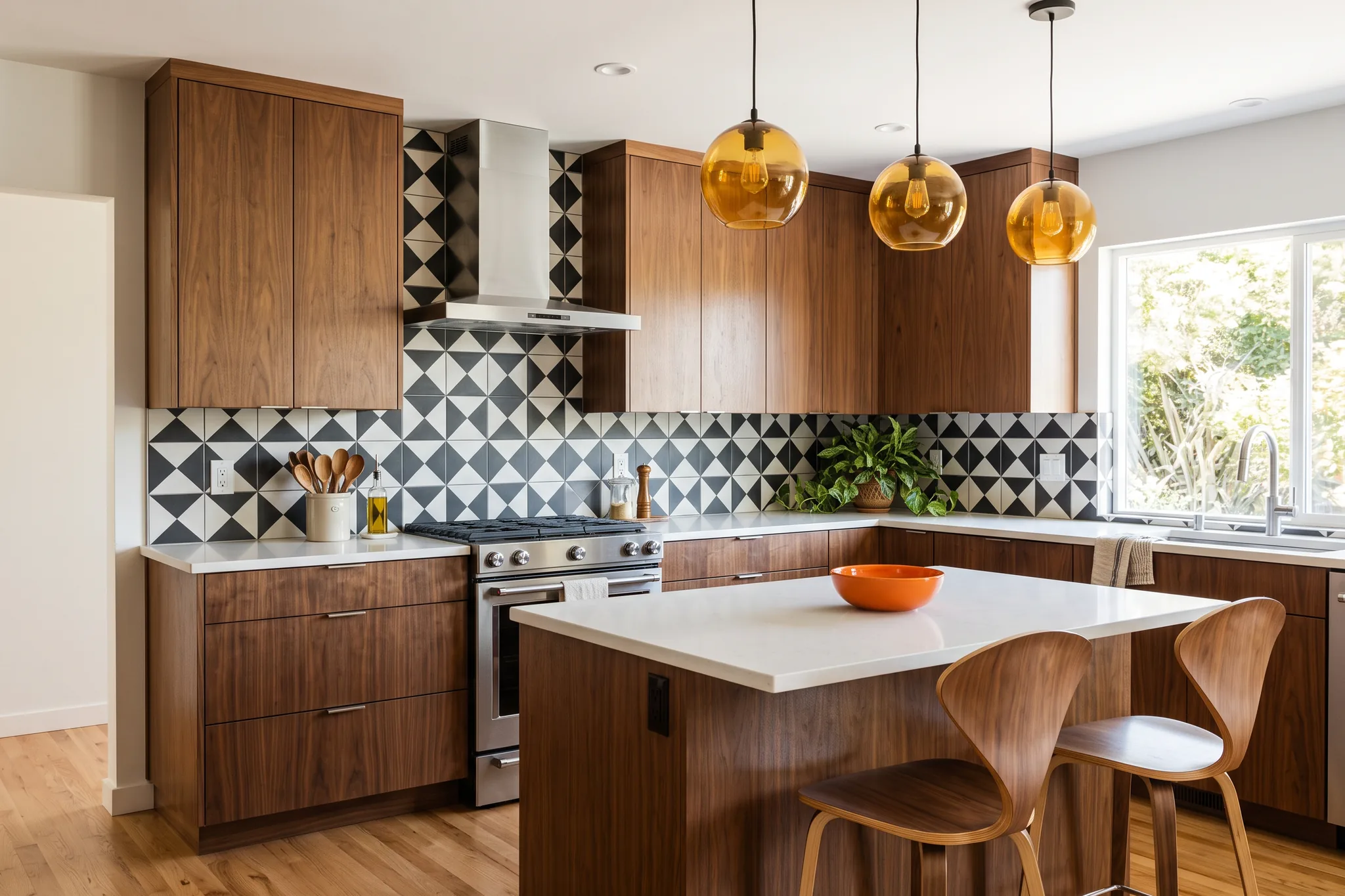
Mid-Century Modern Materials
On the contrary, mid-twentieth-century-inspired cabinets use high-quality natural materials, often made of solid hardwoods like teak and walnut. This provides that rich tone and retro-vibey look. A light layer of veneer over the wood cabinets is applied to highlight the graining. Cabinets in mid-century modern design are often made in the U.S., adding value and authenticity.
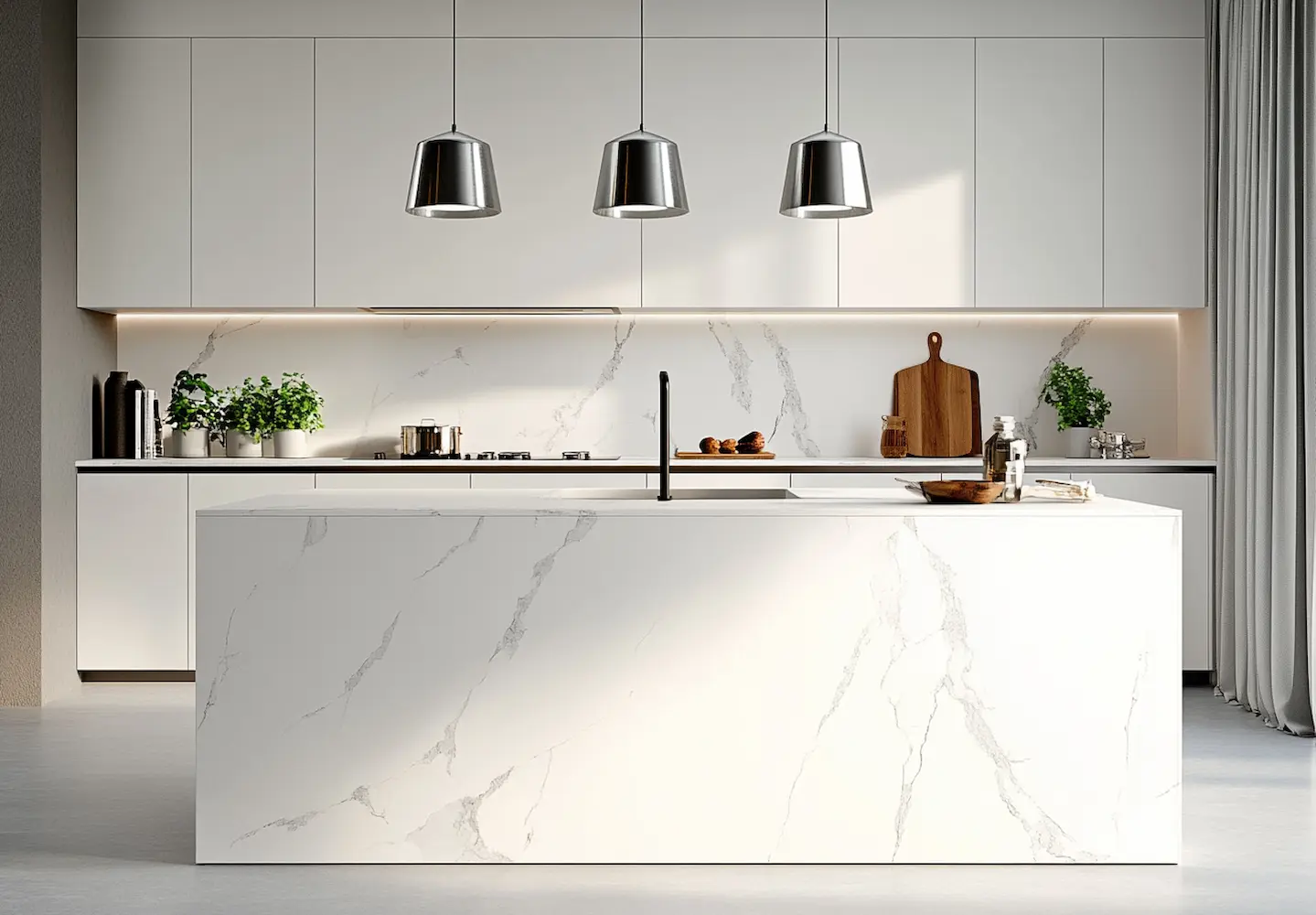
Contemporary Solutions
Contemporary cabinets are designed for modern lifestyles, blending utility with style. There are smart storage systems that maximize space and functionality. For example pull-outs and adjustable shelving.
The cabinets also have integrated lighting. It’s also common to find tech-friendly features like charging stations and smart controls to meet today’s connectivity demands.
MCM Adaptations
Mid-century modern cabinets have a timeless appeal. In many modern homes with MCM designs, you can find some modern touches as well. In comparison, mid-century modern design has a more classic organizational system, although you can also find hidden compartments to help maintain a clutterless space.
But one thing remains true to the classic MCM design: the comfort, accessibility, and ease of use.
Integration with Bay Area Homes
Contemporary design is well-suited to the Bay Area since it aligns with its innovation culture. The high-tech finishes, metallic pendant lights, and handleless design adapt to urban loft living.
On the contrary, mid-century modern cabinets seem to fit naturally in homes in the Bay Area, giving their historical significance. Eichler homes are common in this area and most of them have mid-century modern design elements. Most homes have open floor plans, warm wood tones, and natural elements, all suitable for an MCM-inspired home.
Why Consider Contemporary and MCM Designs
These design styles hold high resale values since both have timeless design appeal. Natural wood and the use of premium hardware racks up the value of the home, too.
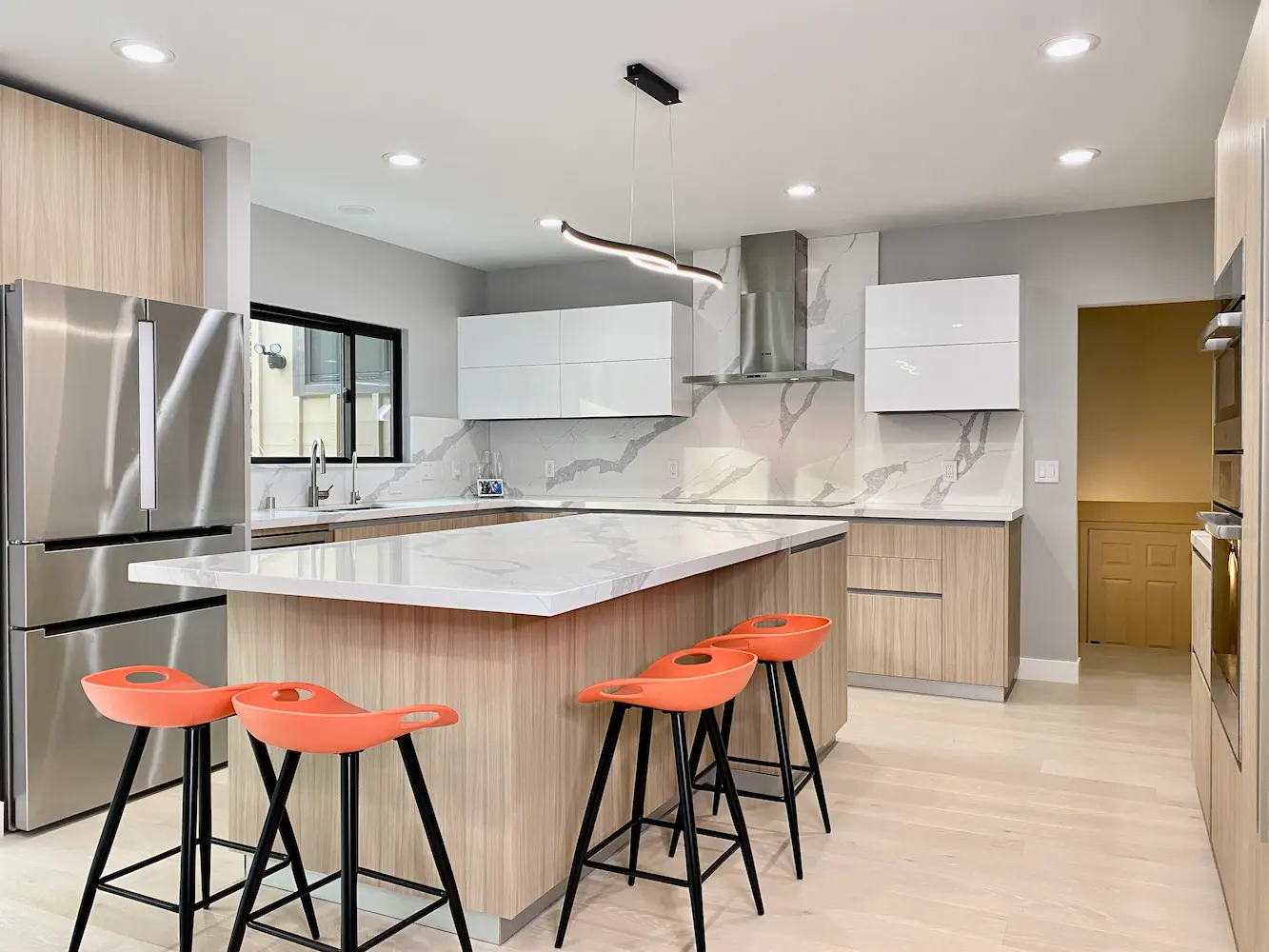
Making Your Selection
Before choosing between contemporary vs mid-century modern cabinets, think about how each style works in the total styling of your home. Contemporary designs are more suitable for the tech-savvy. Such cabinets are more suitable if the home has a modern space.
Mid-century modern style may be more suitable for those who value natural elements in their cabinets. MCM cabinets are best when the home has a more traditional or retro feel. At the end of the day, you can’t go wrong with either choice. You should choose the style that fits your personality and makes you happy.
Are You Ready to Have New Cabinets?
Investing in premium cabinets means increasing your home’s value and defining your living space.
If you’re ready to explore custom cabinet options that match your home’s vision, request a Design Consultation with Artistic Kitchen Cabinets & Design.
Contact Artistic Kitchen Cabinets & Design for kitchen design services and to understand more about contemporary and midcentury modern cabinets. Let’s bring your kitchen designs to life!